Throughout the millennia of Eastern dynasties, Kyara has reigned as the supreme treasure among the “Four Great Fragrant Woods” (Kyara, Agarwood, Sandalwood, and Rosewood). Ancient wisdom dictates, “First is Kyara, second is Agarwood,” cementing the untouchable status of Kyara. A single fragment the size of a finger was once worth an entire estate, cherished by emperors as a national treasure.
But what truly defines the boundary between Kyara and natural Vietnamese agarwood? How do White, Green, Yellow, and Black Kyara differ? And why, in today’s world of scent appreciation, is Antique Wild Sunken Agarwood (Tram Ruc) considered the grade closest to the divine essence of Kyara? This article provides an analytical perspective from the master makers of Phu Van Huong, blending scientific insight with traditional craftsmanship.
1. Defining Kyara: The Vital Distinction
Both Kyara and Vietnamese agarwood originate from the resinous defense mechanism of the Aquilaria crassna tree, native to the ancient forests of Central Vietnam. However, their biological transformation is fundamentally different:
- Natural Vietnamese Agarwood: Resin permeates the vascular fibers of the wood. The cellulose structure remains intact, alternating between dark resinous veins and pale grey wood fibers.
- Kyara: A rare biological metamorphosis occurring in only one in millions of ancient trees. The resin concentration is so intense that it dissolves the wood fibers entirely, transforming the mass into a soft, waxy, and moist substance.
The Connoisseur’s Identification of Kyara:
“Kyara is waxy and pliable; a fingernail pressed into it leaves a deep, elastic indentation. Upon tasting, it reveals five distinct notes: sour, spicy, sweet, bitter, and a cooling numbness that lingers for hours. When heated, the smoke rises in a straight, ethereal blue-white column, shifting from a crisp, cool breeze to a profound, honeyed sweetness.”
2. The Four Classical Grades of Kyara
Ancient texts categorize natural Kyara into four grades based on color and resin density:
| Grade | Characteristics |
|---|---|
| White Kyara | Ivory or pale ash; extremely waxy and dense with the highest resin content. |
Curated Selections from Thuong Dat Artisan Workshop
At Phu Van Huong, we reject the use of toxic phosphoric acid (H3PO4) chemical ash-curling agents found in mass-market incense. Our coreless incense sticks are crafted using traditional hardwood alignment battens, ensuring a pure, meditative experience.
- Natural Herbal Incense Sticks (8 Sacred Herbs) – $5 USD
- Pure Vietnamese Agarwood Incense Sticks – $20 USD
- Antique Wild Agarwood (Tram Ruc) – Connoisseur Edition – $140 USD
Our Connoisseur Edition is presented in airtight precision glass cylinders with brushed brass screw-caps, making them the premier choice for executive cultural gifting and high-level diplomatic exchanges.
3 Signature Artisan Incense Blends by Phu Van Huong
Double-aged in heritage Bat Trang earthenware vessels to eliminate raw plant odors and lock in deep, grounding sweetness for your mindful rituals.
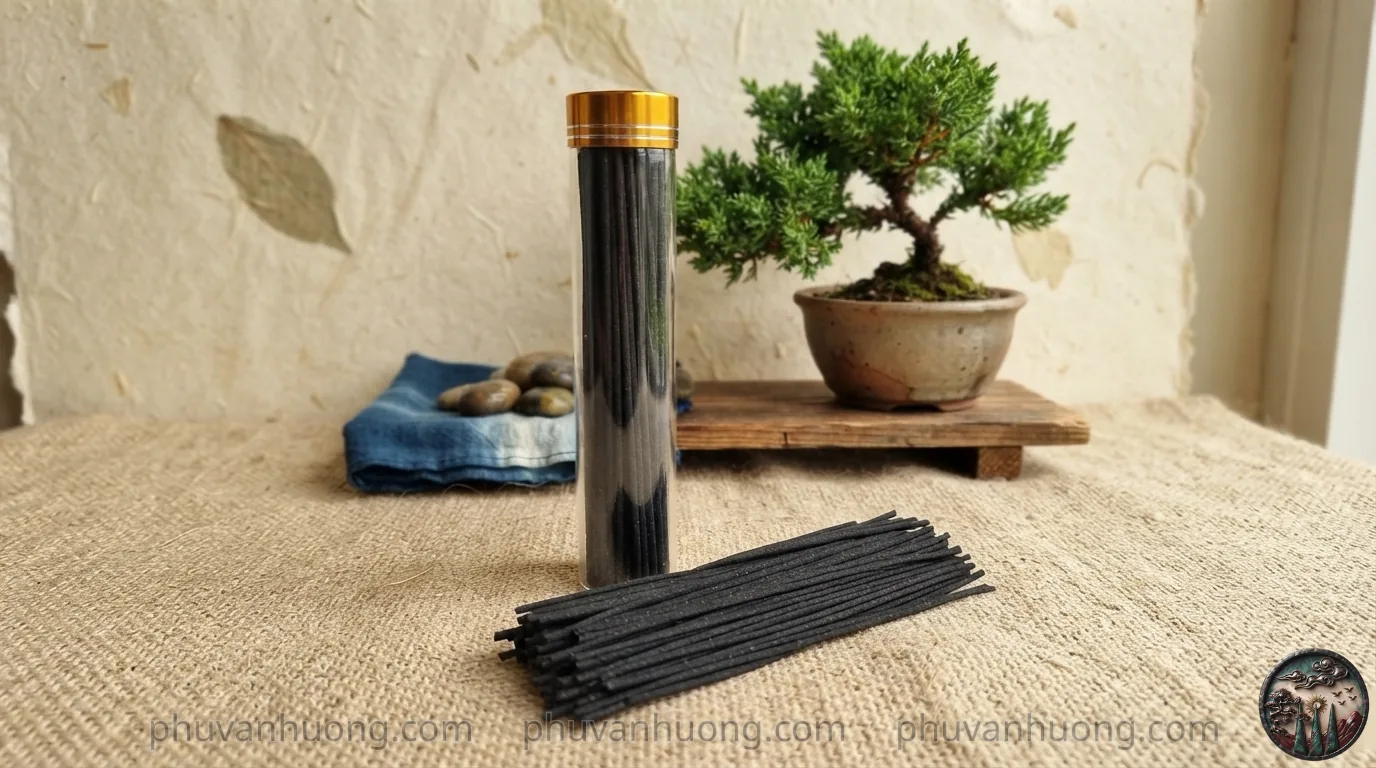
Natural Herbal Incense Sticks
- Double slow-aged: eliminates acrid pungency, retains sweet herbal depth
- 3-year aged mugwort, aged tangerine peel, honey locust, cinnamon, cypress
- Purifies living spaces, alleviates mental tension, promotes deep sleep
- Approx. 80 sticks (8 inches / 20cm) • 45-60 min burn time
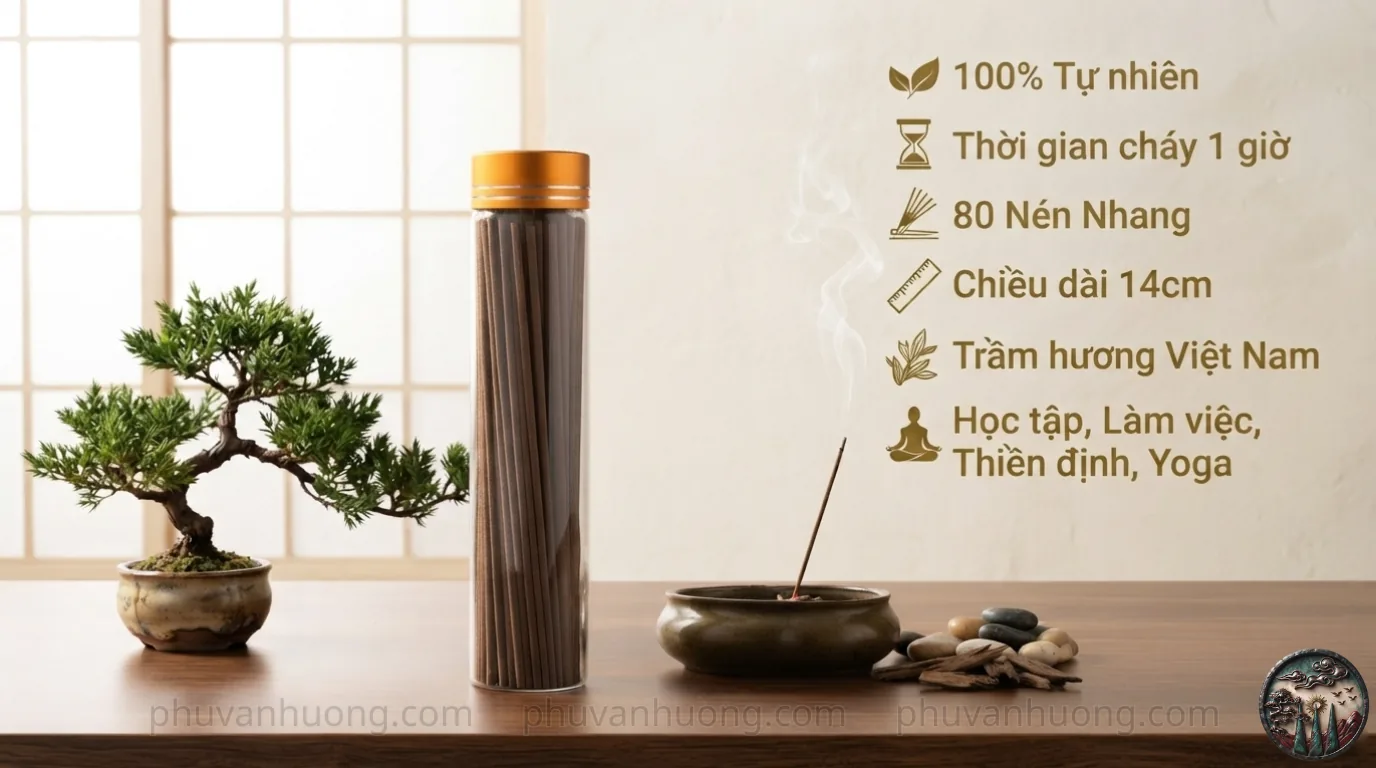
Pure Vietnamese Agarwood Incense
- 100% authentic Vietnamese Agarwood heartwood powder
- Slow-cured twice: eliminates coarse wood notes, awakens pure resin aroma
- Soothing, warm, honeyed-woody notes for meditation & deep presence
- Zero chemical burn accelerants, 100% bamboo-free pure ash
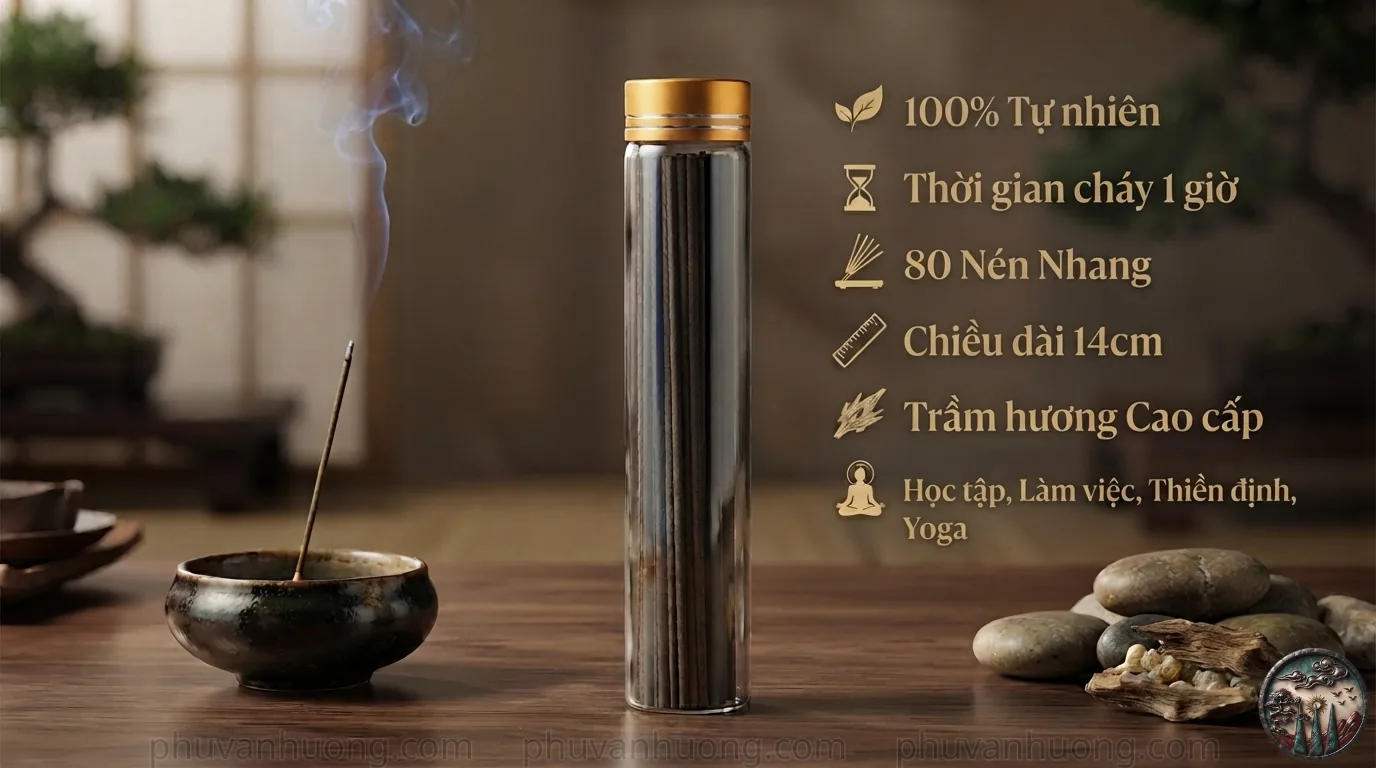
Antique Wild Agarwood (Tram Ruc)
- High-density wild sunken resin from deep ancient Vietnamese jungles
- Bespoke double maturation: deeply sweet, penetrating, non-turbid aroma
- Profound relaxation, clears mental fatigue, spiritual elevation
- Luxury glass cylinder with brass cap • Approx. 80 sticks