Throughout the millennia-old history of incense appreciation and Eastern royal ritual, Agarwood and Sandalwood have been revered as the “King” and “Queen” of the aromatic world. One is a sacred resinous wood born from the trauma of the Aquilaria tree deep within the wild mountains; the other is the precious, creamy heartwood of a tropical semi-parasitic tree.
Connoisseurs often find themselves at a crossroads: How do the notes of Sandalwood and Agarwood truly differ? In what settings should one burn Sandalwood, and when is Agarwood the ultimate choice? Let the master maker of Phu Van Huong guide you through the olfactory structure and energetic profiles of these two Eastern masterpieces.
1. Origins and Biological Essence
The fundamental distinction begins with the biological mechanism that generates their fragrance:
Sandalwood (Santalum album): A semi-parasitic tree that draws nutrients from the roots of neighboring hosts. Its essential oil forms naturally within the heartwood and roots over 15 to 30 years without external intervention.
Vietnamese Agarwood (Aquilaria crassna): Not a species of wood, but a precious resinous transformation. It occurs when the wild Aquilaria tree sustains an injury—from lightning, insects, or physical damage—and secretes a protective, aromatic resin to heal itself. Over decades or centuries of exposure to the elements, this resin integrates into the wood fibers to create the legendary Agarwood.
2. Olfactory Structure: Creamy Sandalwood vs. Deep Agarwood
When lighting a natural coreless incense stick, your senses will immediately identify two distinct profiles:
| Characteristic | Natural Sandalwood | Phu Van Huong Agarwood |
|---|---|---|
| Primary Notes | Creamy, buttery, and smooth with a warm, spicy undertone; radiates widely upon ignition. | Pure, cane-sugar sweetness with herbal coolness and a profound, lingering finish. |
| Emotional Impact | Joyful, enveloping, and cozy; stimulates creativity and open dialogue. | Serene, majestic, and grounding; guides the mind into deep meditative states. |
| Purification | Powerful diffusion; rapidly masks ambient odors. | Neutralizes organic odor molecules; thoroughly cleanses the micro-atmosphere. |
3. The Phu Van Huong Standard
At the Thuong Dat artisan workshop in Hai Phong, Vietnam, we reject the industry-standard use of toxic phosphoric acid (H3PO4) for ash-curling. We craft our coreless incense sticks using only natural binders and hardwood alignment battens to ensure a pure, 5.3-inch (13.5cm) burn that lasts 45 to 60 minutes.
For those seeking the pinnacle of executive cultural gifting, we recommend our signature collections, housed in airtight precision glass cylinders with brushed brass screw-caps:
- Natural Herbal Incense Sticks (8 Sacred Herbs) – $5 USD
- Pure Vietnamese Agarwood Incense Sticks – $20 USD
- Antique Wild Agarwood Incense Sticks (Tram Ruc) – $140 USD
3 Signature Artisan Incense Blends by Phu Van Huong
Double-aged in heritage Bat Trang earthenware vessels to eliminate raw plant odors and lock in deep, grounding sweetness for your mindful rituals.
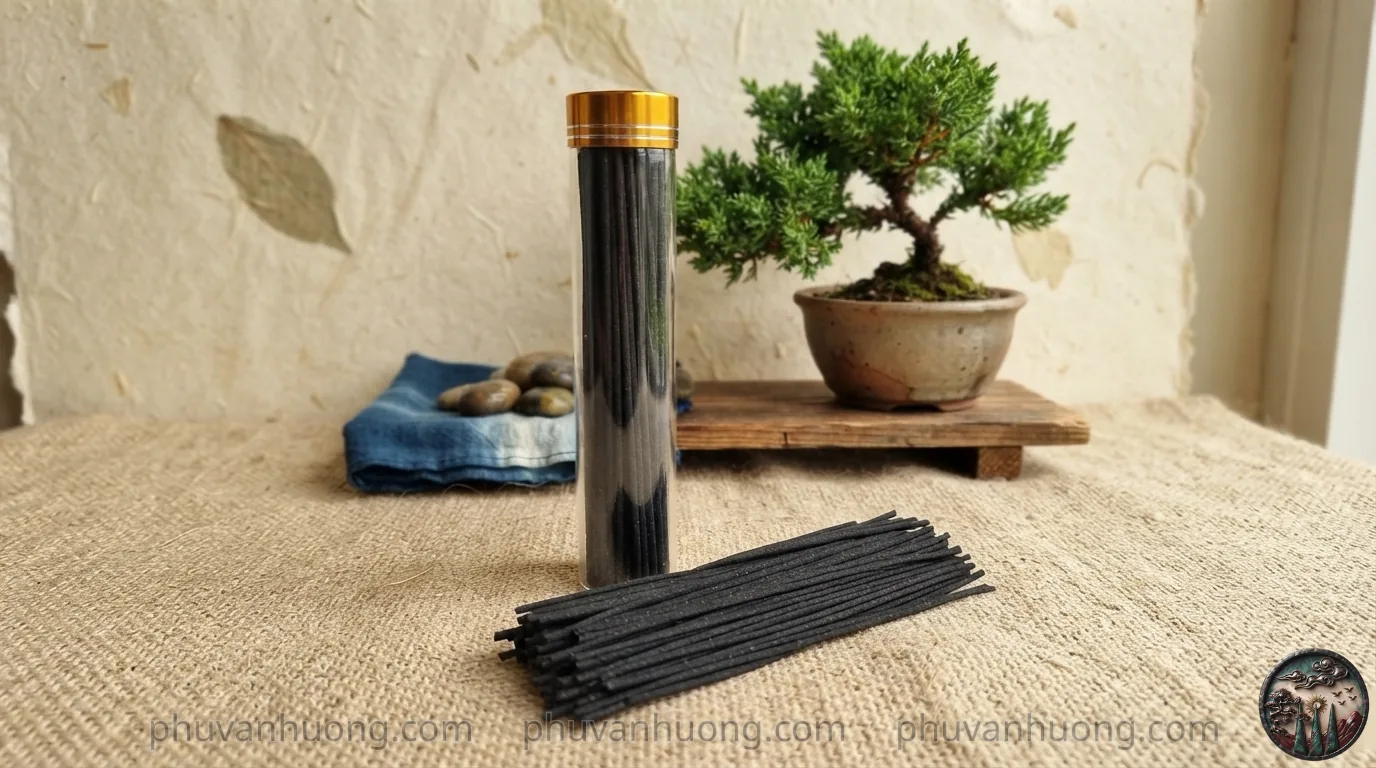
Natural Herbal Incense Sticks
- Double slow-aged: eliminates acrid pungency, retains sweet herbal depth
- 3-year aged mugwort, aged tangerine peel, honey locust, cinnamon, cypress
- Purifies living spaces, alleviates mental tension, promotes deep sleep
- Approx. 80 sticks (8 inches / 20cm) • 45-60 min burn time
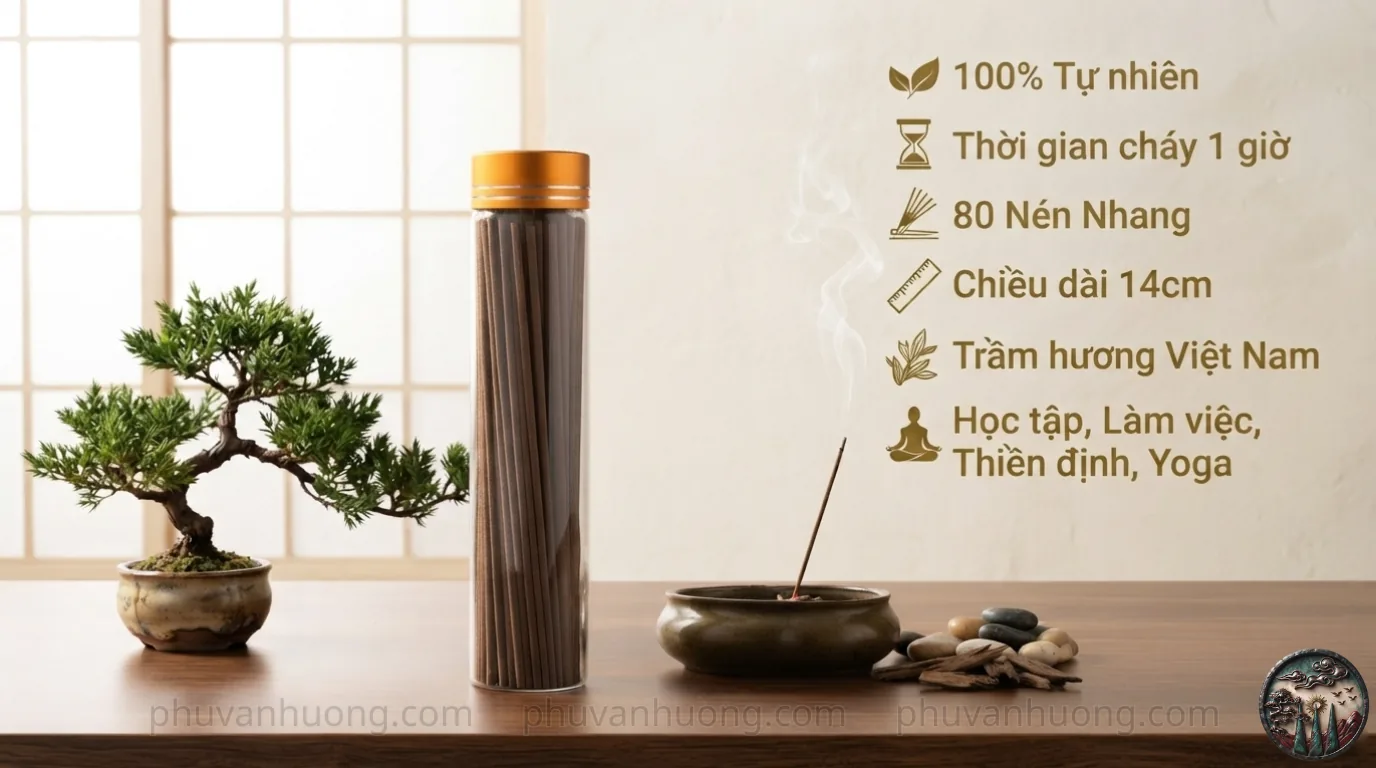
Pure Vietnamese Agarwood Incense
- 100% authentic Vietnamese Agarwood heartwood powder
- Slow-cured twice: eliminates coarse wood notes, awakens pure resin aroma
- Soothing, warm, honeyed-woody notes for meditation & deep presence
- Zero chemical burn accelerants, 100% bamboo-free pure ash
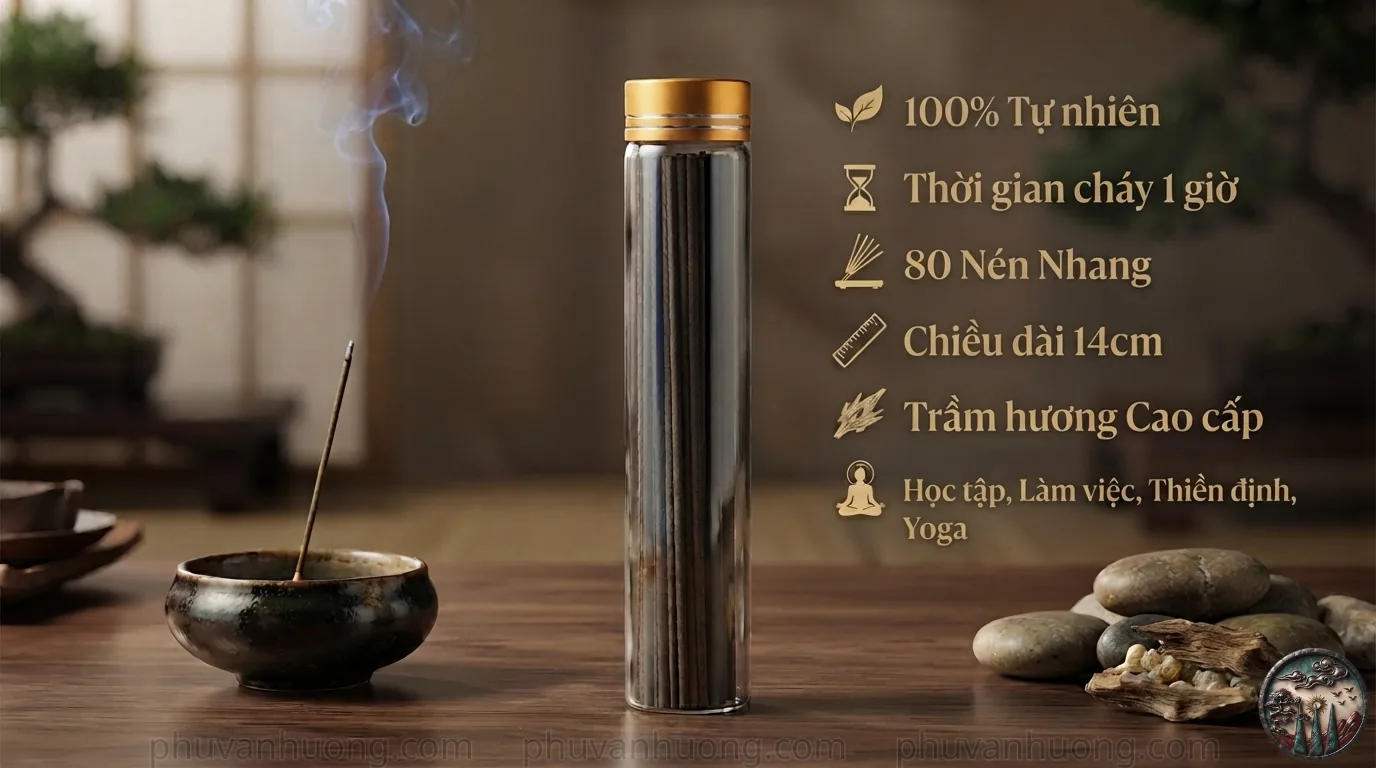
Antique Wild Agarwood (Tram Ruc)
- High-density wild sunken resin from deep ancient Vietnamese jungles
- Bespoke double maturation: deeply sweet, penetrating, non-turbid aroma
- Profound relaxation, clears mental fatigue, spiritual elevation
- Luxury glass cylinder with brass cap • Approx. 80 sticks