Have you ever wondered why inexpensive incense sticks, often found in markets or near temples, burn with such aggressive intensity—defying wind and humidity, their embers glowing fiercely without ever extinguishing? Many mistake this for a sign of quality. In reality, this persistent flame hides a dark secret of the industrial incense trade: the use of potassium nitrate (KNO₃), a chemical accelerant historically used as the primary component in black gunpowder.
To minimize costs and facilitate high-pressure hydraulic manufacturing, industrial workshops have transformed sacred offerings into “miniature pyrotechnics,” smoldering and releasing toxic nitrogen oxide gases into your home. This article exposes the science behind KNO₃ and shares the natural, chemical-free combustion principles practiced by the master maker of Phu Van Huong.
1. What is Potassium Nitrate (KNO₃) and Why is it Used?
Potassium nitrate, commonly known as saltpeter, is an inorganic salt with powerful oxidizing properties. Historically, it served as the backbone of traditional black gunpowder. At the Thuong Dat artisan workshop in Hai Phong, Vietnam, we reject such additives in favor of purity.
The Motivation Behind Chemical Accelerants
1. Filler and Impurities: To maximize profit, industrial workshops often blend 40%–60% limestone powder (CaCO₃), decayed sawdust, or clay into the incense core. These materials cannot burn on their own, necessitating the addition of KNO₃.
2. Compensating for Hydraulic Compression: Industrial machines compress incense with tons of pressure, eliminating the air pockets necessary for natural combustion. Without KNO₃ to provide internal oxygen, these dense sticks would extinguish within seconds.
2. The Chemical Reaction and the Dangers of Nitrogen Oxides
When KNO₃-treated incense is ignited, the ember (reaching 400°C–600°C) triggers a thermal decomposition that forces the stick to burn without atmospheric oxygen. At these high temperatures, the resulting nitrites release toxic nitrogen oxides (NOₓ), which are known to cause respiratory distress and long-term health complications.
The Phu Van Huong Standard: Pure, Artisanal Craftsmanship
At Phu Van Huong, we honor the ancient tradition of 100% natural, bamboo-free coreless incense sticks. Our artisans utilize hardwood alignment battens to ensure perfect density, allowing for a clean, meditative burn (45 to 60 minutes) without a single trace of chemical accelerants. We invite you to experience the difference of true Vietnamese agarwood (Aquilaria oud).
Our Signature Collections
- Natural Herbal Incense Sticks (8 Sacred Herbs) – $5 USD
- Pure Vietnamese Agarwood Incense Sticks – $20 USD
- Antique Wild Agarwood (Tram Ruc) – Connoisseur Edition – $140 USD
For those seeking the pinnacle of executive cultural gifting, our Connoisseur Edition is presented in airtight precision glass cylinders with brushed brass screw-caps, preserving the delicate resinous profile of antique wild sunken agarwood.
3 Signature Artisan Incense Blends by Phu Van Huong
Double-aged in heritage Bat Trang earthenware vessels to eliminate raw plant odors and lock in deep, grounding sweetness for your mindful rituals.
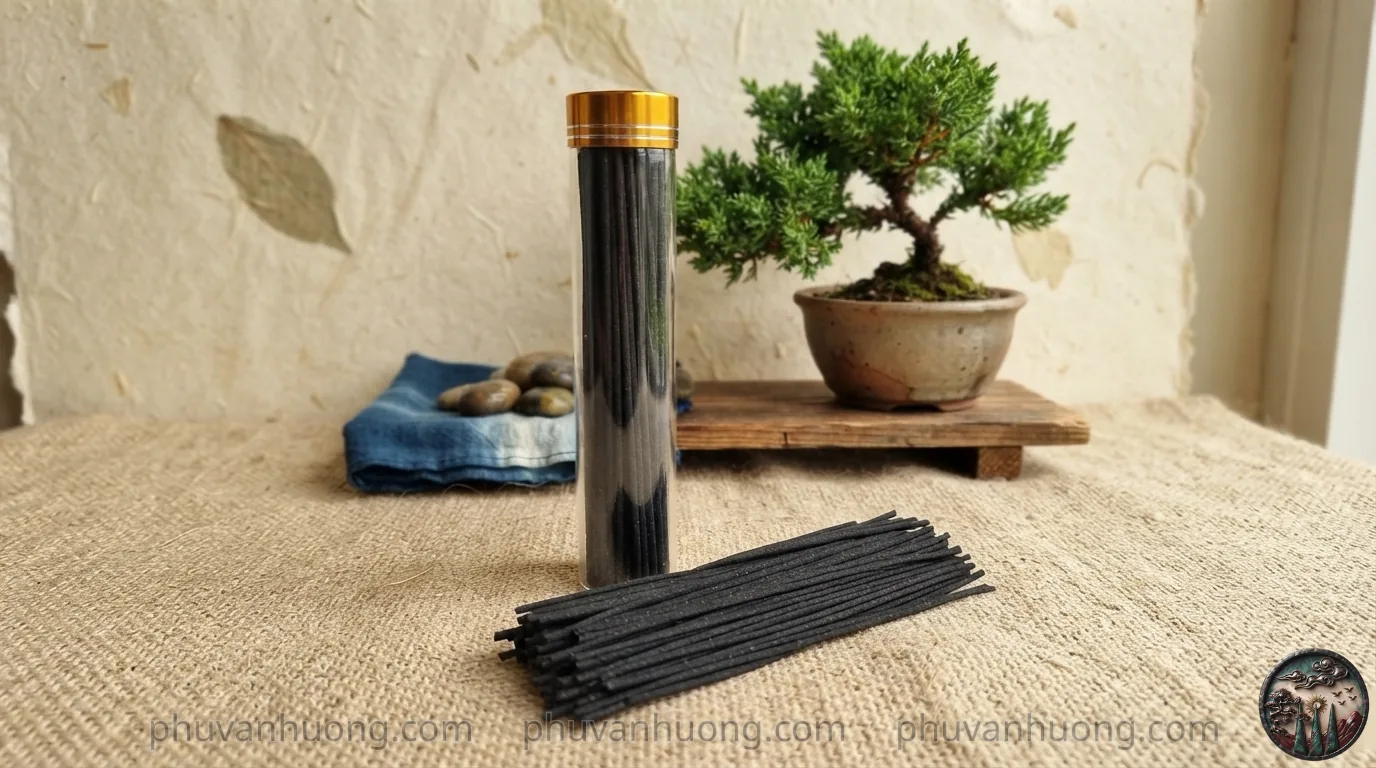
Natural Herbal Incense Sticks
- Double slow-aged: eliminates acrid pungency, retains sweet herbal depth
- 3-year aged mugwort, aged tangerine peel, honey locust, cinnamon, cypress
- Purifies living spaces, alleviates mental tension, promotes deep sleep
- Approx. 80 sticks (8 inches / 20cm) • 45-60 min burn time
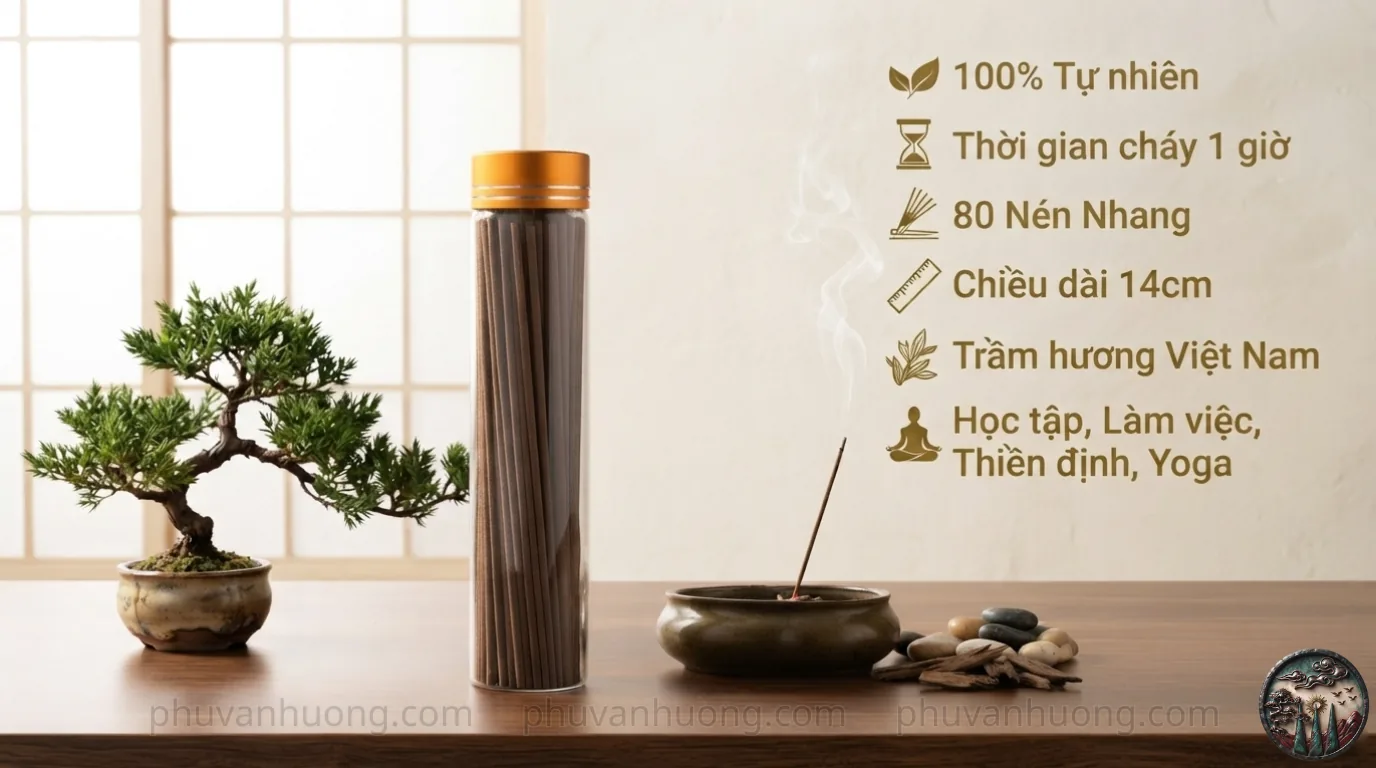
Pure Vietnamese Agarwood Incense
- 100% authentic Vietnamese Agarwood heartwood powder
- Slow-cured twice: eliminates coarse wood notes, awakens pure resin aroma
- Soothing, warm, honeyed-woody notes for meditation & deep presence
- Zero chemical burn accelerants, 100% bamboo-free pure ash
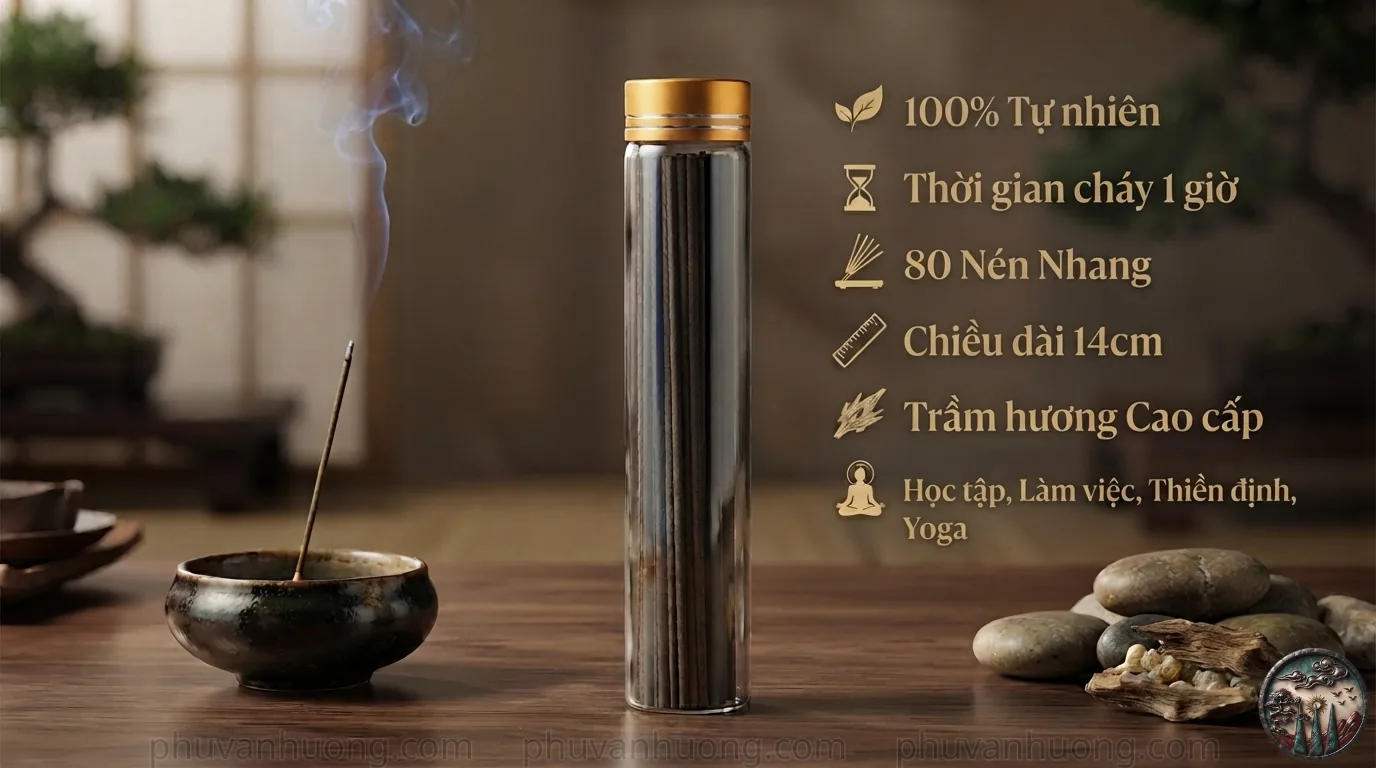
Antique Wild Agarwood (Tram Ruc)
- High-density wild sunken resin from deep ancient Vietnamese jungles
- Bespoke double maturation: deeply sweet, penetrating, non-turbid aroma
- Profound relaxation, clears mental fatigue, spiritual elevation
- Luxury glass cylinder with brass cap • Approx. 80 sticks